🎙️ Pronunciation Mastery
Master English pronunciation with proven techniques to sound like a native speaker.
Key Topics Covered
- ✓ Vowel sounds and consonant pronunciation
- ✓ Word stress and sentence intonation
- ✓ Connected speech and linking
- ✓ Common pronunciation mistakes
- ✓ Accent reduction techniques
📊 Visualize Your Tone with a Spectrogram
What is a Spectrogram?
A spectrogram is a visual graph that shows:
- Pitch (high/low tones) - Changes in your voice during speech
- Volume (loudness) - How loud you speak at each moment
- Frequency patterns - The patterns your voice creates
- Speech flow - How your voice changes during connected speech
Think of it as a "voice fingerprint" - it lets you SEE what you're doing with your voice instead of just hearing it.
Why Spectrograms Help Your Pronunciation
1. Detect Intonation Problems
Problem: You end a statement with a rising tone when it should fall
Visual: Spectrogram shows your pitch going UP at the end (should go DOWN)
Fix: Adjust your tone down at sentence endings to sound more natural
2. Fix Tone Mistakes (Common for Chinese Speakers)
Problem: Chinese speakers often add tones to English words (which don't have tones)
Example: Saying "hello" with a rising tone makes it sound unnatural
Visual: Spectrogram shows unwanted pitch changes within single English words
Fix: Flatten your pitch - keep steady, don't add musical tones to English
3. Identify Wrong Word Stress
Problem: Stressing the wrong syllable (e.g., "subJECT" instead of "SUBject" for the noun)
Visual: Spectrogram clearly shows which syllables are emphasized (louder/higher)
Fix: Adjust which syllable gets emphasis - make it louder AND higher-pitched
4. Compare Yourself to Native Speakers
Method:
- Record yourself saying a word
- Record a native English speaker saying it
- Compare spectrograms side-by-side
- Visual difference shows exactly what to fix
📱 Recommended App: Spectrolite
Download Spectrolite on iOS:
📲 Get Spectrolite on App Store →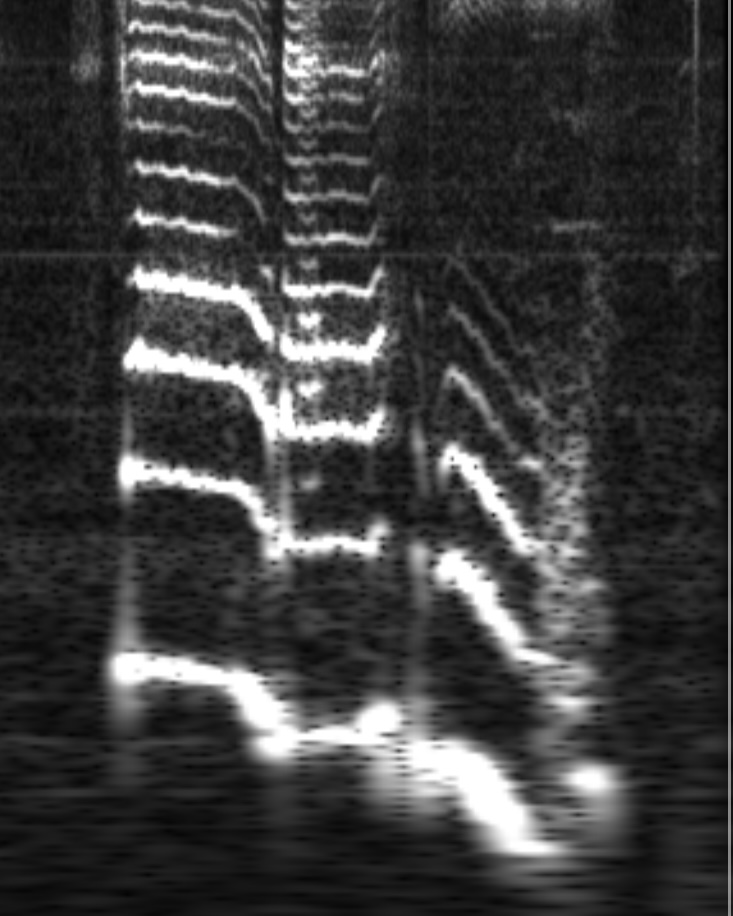
📊 What you're seeing: This is a visual representation of saying a word out loud. The up-and-down patterns show your tone and pitch. You can see:
- 🔼 The peaks show stressed syllables (louder, higher pitch)
- 🔽 The valleys at the end show where your tone drops naturally (end of word/sentence)
- ✅ Same-looking = Same-sounding: Record yourself saying the word and compare your spectrogram to a native speaker's. If they look alike, you sound alike!
Why Spectrolite?
- Displays your tone in real-time as you speak
- Shows pitch patterns visually and clearly
- Perfect for pronunciation practice
- Free or low-cost version available
- Works for all languages, especially helpful for tone languages
🎯 How to Use Spectrograms for Practice
- Open Spectrolite or similar app on your phone
- Say an English word or sentence into your phone
- Watch the spectrogram display your pitch pattern in real-time
- Compare with native speakers (YouTube videos, native friends)
- Adjust your tone to match the native speaker's pattern
- Record again and check - is it closer?
- Repeat until your spectrogram matches the native pattern
🚨 Common Pronunciation Issues Spectrograms Reveal
Issue #1: Rising Tones at End of Statements
Problem: Say "My name is John" with rising tone at "John" (sounds like a question)
What you hear: It sounds uncertain, like you're asking instead of telling
Spectrogram shows: Pitch goes UP at the end (should go DOWN or stay level)
How to fix: Keep your pitch level or drop slightly at sentence end. Practice: Say "The answer is YES" with a confident, falling tone at "YES".
Issue #2: Chinese Tone Patterns in English
Problem: Pronouncing English words with Chinese tones (1st tone flat, 3rd tone rising, etc.)
What you hear: Words sound "musical" or "sing-songy" instead of natural
Spectrogram shows: Unexpected pitch jumps within individual words
How to fix: Keep pitch relatively flat across English words. English doesn't use tones like Chinese - just emphasize the right syllables.
Issue #3: Wrong Word Stress
Problem: "reCORD" (verb) vs "RECord" (noun) - stressing the wrong syllable
What you hear: Words sound strange or unfamiliar to native speakers
Spectrogram shows: Wrong syllables are louder/higher pitched
How to fix: Make stressed syllables both LOUDER and HIGHER-pitched. Practice: "RECord the music" vs "I reCORD the music"
🎤 Choose Your Pronunciation Class Method
Want to work with Tim on pronunciation? Choose between two proven methods:
📚 Learning Modules
📚 Module 1: Vowel Sounds
Learn all 20 English vowel sounds with examples
🔤 Module 2: Consonants
Master the 24 English consonant sounds
Coming soon
⏰ Module 3: Stress & Rhythm
Understand word stress patterns and sentence rhythm
Coming soon
🎵 Module 4: Intonation
Practice rising and falling intonation patterns
Coming soon
📖 Module 5: Reading with Corrections
Master pronunciation through direct feedback and shadowing
🌍 Pronunciation Guides by Native Language
Common pronunciation issues vary based on your native language. Choose your language to focus on the specific challenges: